Ready to embark on epic Minecraft adventures? Before you start building those majestic castles and fighting off pesky creepers, let's ensure your computer is ready for the challenge. This guide will walk you through everything you need to know to guarantee a smooth, lag-free Minecraft experience. We'll cover minimum and recommended specs, how to check your system's capabilities, and how to upgrade if needed. We'll even provide tips for optimizing Minecraft's settings and managing mods to get the best performance, regardless of your computer's power. Let's get started! For additional downloads, check out the Minecraft Downloads.
Minecraft: Java vs. Bedrock – Two Worlds, Two Sets of Needs
Minecraft isn't just one game; it's two distinct experiences: Java Edition and Bedrock Edition. While both offer incredible gameplay, their system requirements differ. Think of it like choosing between a bicycle (minimum specs) and a sports car (recommended specs) – both get you there, but the journey is significantly better in the sports car!
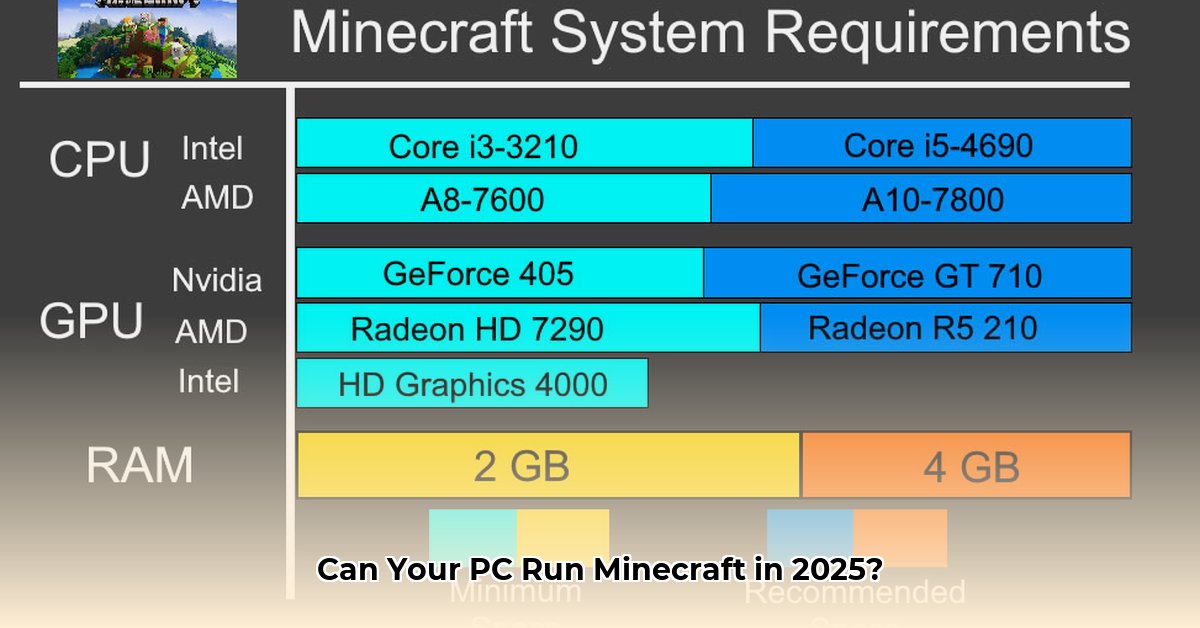
Here’s a breakdown of minimum and recommended specs; remember, these are guidelines, and your experience may vary based on other factors.
| Feature | Minimum Specs (Both Editions) | Recommended Specs (Both Editions) |
|---|---|---|
| Operating System | Windows 7 or later, macOS 10.15 or later, Linux | Windows 10 64-bit, macOS 11 or later, 64-bit Linux |
| Processor (CPU) | Intel Core i3 or AMD equivalent | Intel Core i5 or AMD Ryzen 5 equivalent |
| Memory (RAM) | 4 GB | 8 GB |
| Graphics Card (GPU) | Integrated graphics (your computer's built-in graphics) | Dedicated GPU (e.g., GeForce GTX 700 series or AMD Radeon RX 200 series) |
| Storage Space | 1 GB | 4 GB (more if you plan on using lots of mods or texture packs) |
Notice the significant difference? A faster processor, more RAM, and a dedicated graphics card (a separate card, not the built-in one) vastly improve your Minecraft experience, especially when using mods or high-resolution texture packs. Is your computer ready for the challenge, or is an upgrade in order? Let's find out!
Checking Your System's Specs: A Quick and Easy Process
Determining your system's specs is surprisingly easy. Here's a step-by-step guide:
1. Windows: Right-click the Start button and select "System." This displays your CPU, RAM, and GPU information.
2. macOS: Click the Apple menu and select "About This Mac." This concisely shows your system's specifications.
3. Linux: The method varies depending on your Linux distribution, but generally, you can find this information in your system settings or use the terminal (command line). Search online for "[Your Linux Distribution] check system specs" for specific instructions.
Need Help? Several free online tools automatically scan your computer and compare its specs to game requirements. These tools provide a quick and reliable assessment of your system’s capabilities. Using one can save you considerable time and effort.
Upgrading Your System: A Path to Smoother Gameplay
If your system doesn’t meet Minecraft's recommended specs, don't worry! Upgrading is often straightforward. Consider these key components:
1. RAM: This upgrade is often affordable and dramatically boosts performance. More RAM means faster load times and smoother gameplay, particularly when running multiple applications simultaneously.
2. Graphics Card (GPU): This upgrade significantly enhances visual quality and frame rates. A dedicated GPU is essential for a smoother, more visually appealing experience.
3. Processor (CPU): Upgrading your CPU is generally the most complex and expensive option. This is typically only necessary if you’re using highly demanding mods, playing at extremely high resolutions, or using resource-intensive shader packs. Do you often find yourself needing more processing power?
Important Note: Before upgrading, research compatible components. Processors, graphics cards, and motherboards need to work together. Consult online resources or seek professional advice before purchasing any hardware.
Optimizing Minecraft Settings: Fine-Tuning for Peak Performance
Even with a powerful PC, optimizing Minecraft's settings improves performance. Lowering the render distance (how far you can see), reducing graphics details (like shadows and particle effects), and disabling less crucial effects can all significantly impact performance. Experiment to find the right balance between visual fidelity and smooth gameplay. Have you experimented with different settings to optimize your in-game experience?
Mods and Performance: Enhancing Gameplay While Maintaining Stability
Mods add amazing features, but many are resource-intensive. Choose lightweight mods, or carefully manage resource-heavy mods to minimize their impact on your game's performance. Many mods have settings you can adjust to limit their resource usage.
Troubleshooting: Addressing Common Issues
Experiencing lag, low FPS (frames per second), or crashes? Try these troubleshooting steps:
- Update Drivers: Outdated or corrupted drivers are a frequent culprit. Update your graphics drivers and other crucial hardware drivers.
- Adjust Settings: Lower your Minecraft graphics settings.
- Close Unnecessary Apps: Running too many programs consumes resources.
- Restart Your Computer: This often resolves temporary glitches.
- Reinstall Minecraft: A corrupted game installation can cause various problems. Reinstallation might be necessary.
Ready to Build Your Blocky Empire?
You're now equipped to determine your system's readiness for Minecraft. Whether you need an upgrade or simply need to tweak your settings, this guide provides the knowledge you need to unleash your creativity in the world of Minecraft! Happy crafting!
⭐⭐⭐⭐☆ (4.8)
Download via Link 1
Download via Link 2
Last updated: Monday, April 28, 2025